Admission tests:
Book a consultation
✕
Language
EN
IT
DE
Book a consultation

Applications open

Study Medicine and Dentistry in the United Kingdom and Ireland

Highly selective, English-taught routes into Medicine and Dentistry, with UCAT and HPAT preparation, support with UCAS and CAO applications and interview coaching.

Study Medicine and Dentistry in the United Kingdom and Ireland

General Information

Programmes

Medicine, Dentistry

Indicative living cost

£1,500–2,000 per month (UK) · €1,500 (Ireland)

Next admission session

To be confirmed

United Kingdom and Ireland: discover the destination

Why study Medicine in the UK and Ireland

Studying Medicine or Dentistry in the United Kingdom or Ireland means entering two university systems with a strong academic tradition, an international environment and particularly structured selection processes.

Courses are taught entirely in English and attendance is compulsory, with a progressive move from the scientific and pre-clinical subjects to clinical training and work with patients.

Access is highly selective and does not depend on a single test: universities assess the candidate's profile as a whole, considering school results, aptitude tests, language skills, the personal application and the interview.

In the United Kingdom, the main test used for Medicine and Dentistry is the UCAT, while in Ireland undergraduate entry to Medicine normally goes through the CAO system and, for the programmes that require it, through the HPAT-Ireland. For 2026, the HPAT is required for undergraduate entry to Medicine at several of the main Irish universities.

  • Training entirely in English, in a strongly international university environment.
  • Structured, multi-dimensional selection, based on academic results, tests, language skills and an interview.
  • A progressive clinical pathway, with compulsory attendance and practical training built into the years of study.
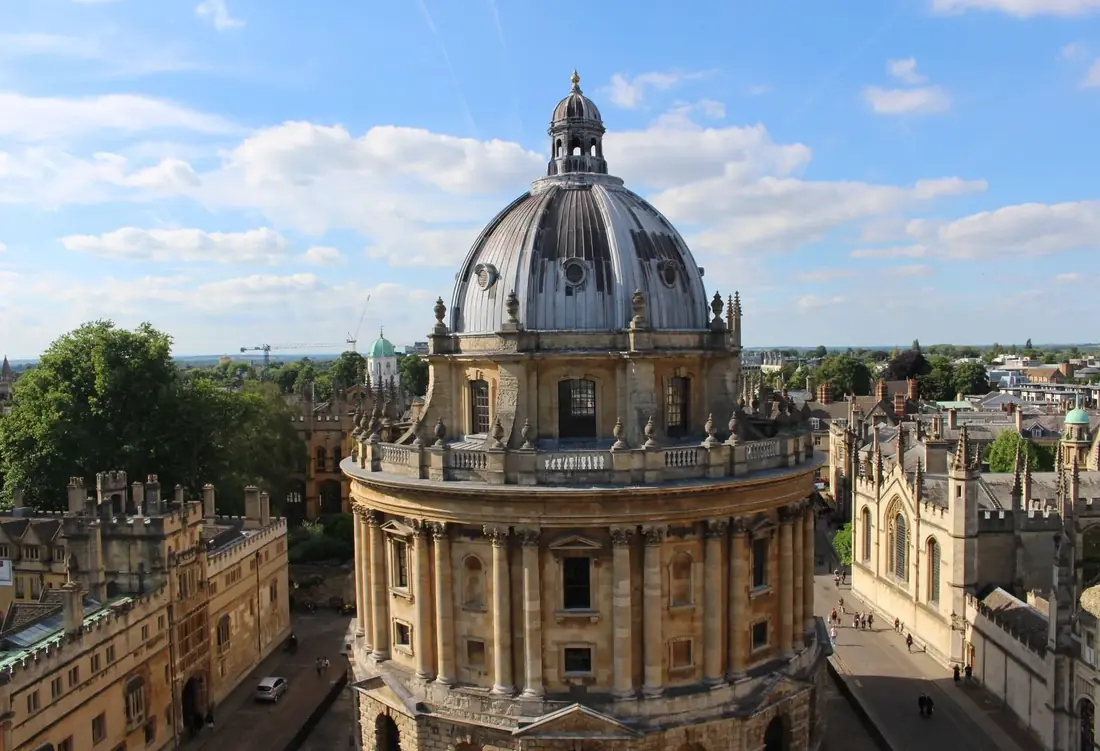
The Radcliffe Camera in Oxford
Request information

We will answer your questions about the programmes, admission steps and student life.

Key facts

  • Programmes: Medicine, Dentistry
  • Teaching language: English
  • Duration: Medicine 5 or 6 years · Dentistry 5 years
  • Credits: Medicine 300 or 360 ECTS · Dentistry 300 ECTS
  • Attendance: mandatory
  • Start: September / October
  • Degree: Doctor of General Medicine (MD)

Medicine

English
5 or 6 years
300/360 ECTS, mandatory attendance
September/October
  • Degree: Doctor of General Medicine (MD)

Dentistry

English
5 years
300 ECTS, mandatory attendance
September/October

Medicine

The Medicine course takes students from the fundamental scientific subjects to pre-clinical and clinical training. The first years focus on the biomedical foundations, while later the weight of clinical subjects and practical experience in hospitals and healthcare facilities increases.

Length varies with the university and the structure of the programme, but traditional undergraduate routes generally last between five and six years. In some cases Graduate Entry Medicine routes are also available, for candidates who already hold a degree and meet specific requirements.

Dentistry

The Dentistry course combines solid scientific and medical preparation with progressively more specific training devoted to oral health. During the course, pre-clinical activity, manual skills and clinical training with patients become increasingly important.

Dentistry is selective as well, and admission can include aptitude tests, academic assessment, an English language check and an interview.

Course length and tuition in Ireland

Medicine and Dentistry courses in Ireland vary in length, typically between four and six years, depending on the pathway and the university. Undergraduate routes are generally longer, while graduate entry routes, open to candidates who already hold a degree, are shorter and have their own specific requirements.

Tuition: in the United Kingdom, fees for international students are generally around £30,000 per year; in Ireland, they are generally around €9,000 per year. Fees vary by university and programme, so request a current comparison for the universities you are interested in.

Degree recognition

University programmes in the UK and Ireland sit within a structured academic framework recognised at European level. If your goal is to work in Europe, it is essential to plan your pathway clearly from the start. For opportunities outside the EU (for example, Canada or the USA), access depends on each country’s procedures: in a consultation, we help you assess the options realistically.

Tuition fees

The Houses of Parliament and Big Ben in London

Studying in the United Kingdom or Ireland means joining a strongly international university environment, in which English is used every day both in teaching and in academic life.

The teaching model gives particular importance not only to theoretical preparation but also to skills such as problem solving, communication, decision making, teamwork and the management of clinical situations.

The overall cost of the pathway can vary significantly. In the United Kingdom, tuition for international students is generally high and can reach or exceed around £30,000 per year, while in Ireland costs can be lower but depend strongly on the university and the type of programme.

Accommodation, transport and day-to-day living costs must be added to tuition, and they are generally higher than in many destinations in southern or eastern Europe.

Indicative living cost:
£1,500–2,000 per month (UK) · €1,500 (Ireland)
Request information

How admission works

Application steps

Next admission session

To be confirmed

Next academic-year session

Access to Medicine and Dentistry in the United Kingdom and Ireland is highly selective and is assessed through several elements.

United Kingdom: UCAT — University Clinical Aptitude Test

The UCAT is one of the main tools used by Medicine and Dentistry faculties during selection. It is not a traditional Biology or Chemistry test: it is an aptitude test designed to assess skills considered relevant to medical and dental training.

  • Verbal Reasoning — the ability to analyse and quickly understand written information.
  • Decision Making — the ability to make decisions and judgements on the basis of complex information.
  • Quantitative Reasoning — the ability to interpret numbers, graphs, tables and data.
  • Situational Judgement — how the candidate interprets realistic situations in an educational or healthcare setting and identifies appropriate behaviour.

The test lasts just under two hours and is mostly multiple choice. The UCAT Consortium specifies that there is no penalty for wrong answers. Universities use the UCAT score in different ways, often to decide which candidates to invite to interview.

Interview

A central stage of the selection is often the interview, which can be organised in the MMI (Multiple Mini Interview) format. The candidate goes through a series of short stations or scenarios designed to assess communication, reasoning, motivation, the ability to handle complex situations and awareness of the professional role.

Ireland: HPAT — Health Professions Admission Test

For undergraduate entry to Medicine in Ireland, the programmes that require it use the HPAT-Ireland. The HPAT is an online multiple-choice test lasting about two and a half hours.

It is designed to assess mainly:

  • logical reasoning;
  • problem solving;
  • the ability to understand and interpret information;
  • non-verbal reasoning;
  • the ability to understand people's behaviour, emotions and intentions.

The HPAT result is used together with the other academic requirements to determine how competitive a candidate is. For 2026, the HPAT is required for undergraduate entry to Medicine in several programmes, including those at the University of Galway, RCSI, Trinity College Dublin, University College Cork and University College Dublin.

No items found.

How Medicor Tutor supports you

Since 2009 Medicor Tutor has helped students study Medicine and Dentistry abroad. In the UK and Ireland, selection must be planned well in advance.

UK & Ireland assistance package

  • Guidance and personalised consultancy — analysis of your profile and support in choosing the universities that best match requirements, academic results and goals.
  • UCAT / HPAT preparation — access to an e-learning platform dedicated to test preparation, with exercises, mock tests, video lessons and performance analysis tools.
  • Individual preparation — around 30 hours of preparation in total, including online workshops and more than 10 hours of one-to-one teaching with tutors specialised in UCAT / HPAT preparation.
  • Application support — help managing applications through UCAS for the United Kingdom and CAO for Ireland.
  • Test registration — assistance registering for the UCAT and/or HPAT sessions required by your pathway.
  • Practical support for the tests — guidance on the procedures and organisation needed to sit the admission tests correctly.
  • Enrolment assistance — support with the administrative steps after admission, up to completing university registration.
  • Document preparation — collection, checking and organisation of the documents required for the applications.
  • Translations included — translation of the documents needed for enrolment, as covered by the service.
  • Accommodation guidance — help finding private or university accommodation.
  • Support with scholarships — information and assistance in assessing and applying for any available scholarships or reductions once admitted.
Request info

Frequently asked questions

Which programmes can I study in the UK and Ireland?

Medicine and Dentistry, both taught in English. In the UK, Medicine lasts 5 or 6 years and Dentistry 5 years, with courses starting in September or October; in Ireland, courses typically last between four and six years, depending on the pathway and the university.

How much does it cost to study in the UK or Ireland?

In the UK, tuition is generally high, close to or above £30,000 per year, with indicative living costs of £1,500–2,000 per month. In Ireland, tuition is generally around €9,000 per year, with indicative living costs of around €1,500 per month. Fees vary by university and programme.

How does admission to Medicine in the UK work?

You apply through UCAS, and most universities require the UCAT. Selection also considers your school grades (especially in science), an IELTS score, a personal statement with references and an interview, often in MMI format.

How does admission to Medicine in Ireland work?

Applications go through the CAO system. For undergraduate entry to Medicine, the programmes that require it use the HPAT-Ireland, an online multiple-choice test of about two and a half hours, whose result is considered together with your academic results.

Want to know more?

Fill in the form below and we will reply within 24 hours with the information brochure.

Inside the campus

MediCampus Europeo building in Floriana, Malta
Lecture hall at MediCampus Europeo
MediCampus Europeo campus in Floriana, Malta
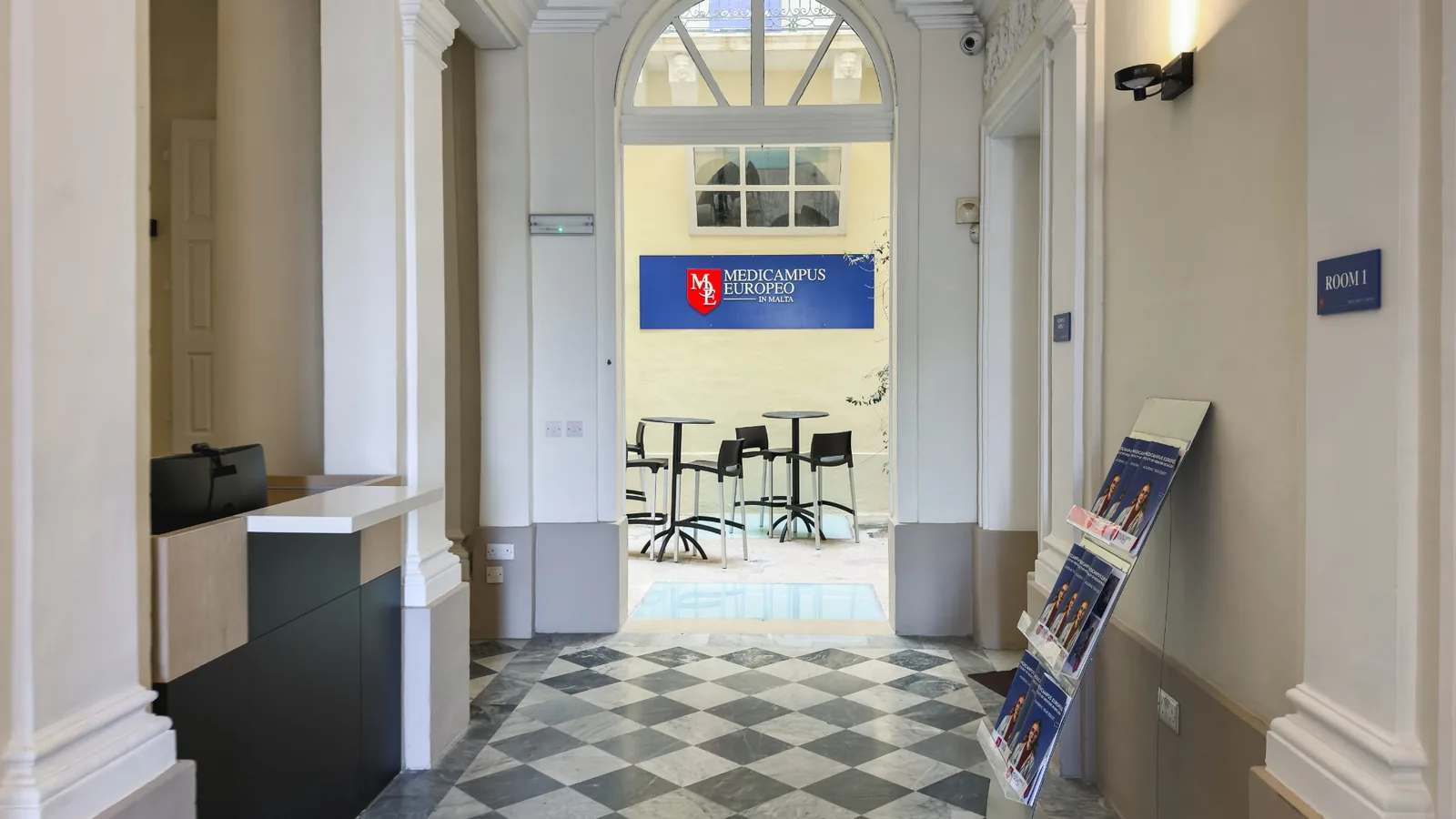
Entrance hall of MediCampus Europeo
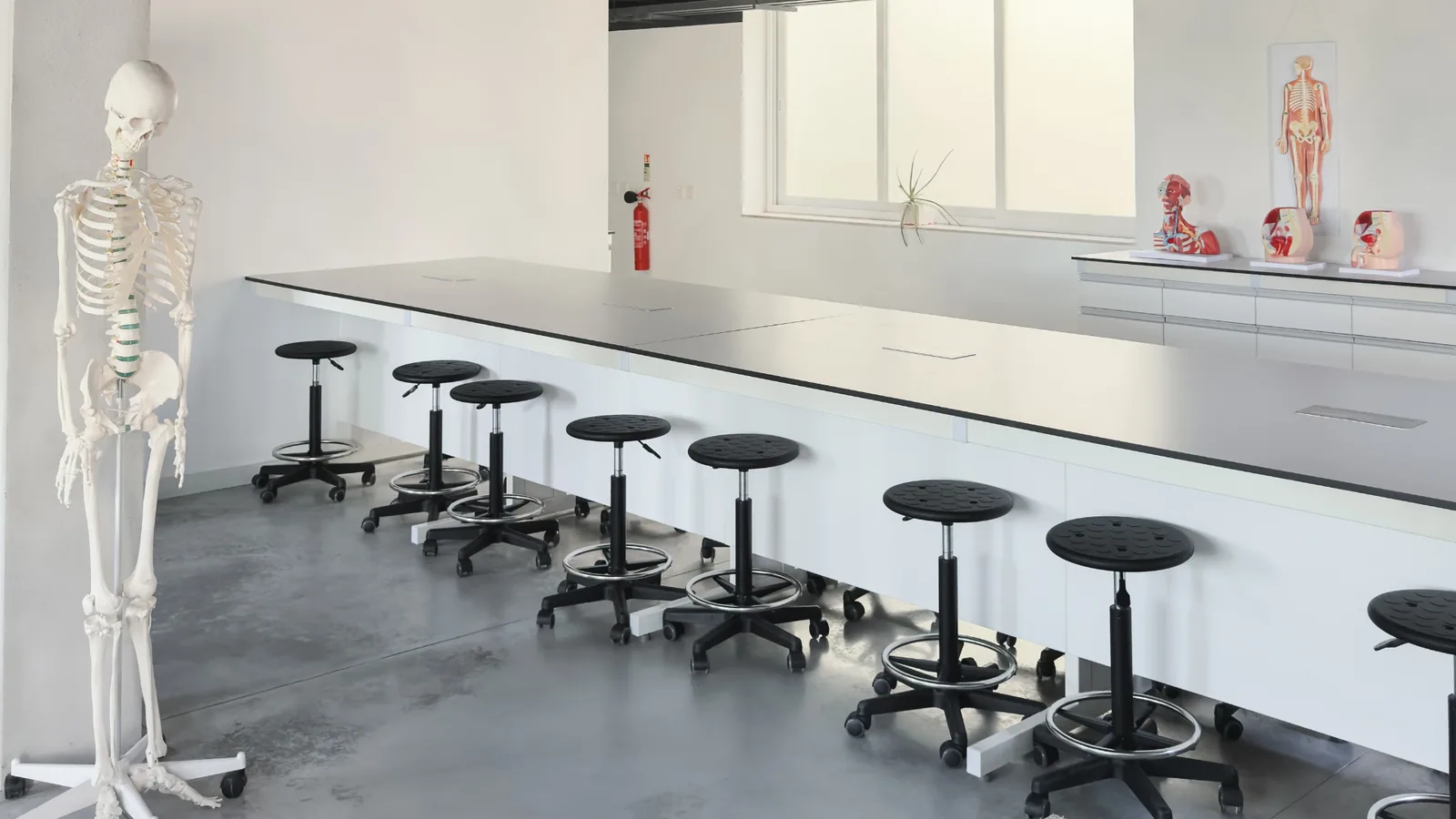
Anatomy room at MediCampus Europeo
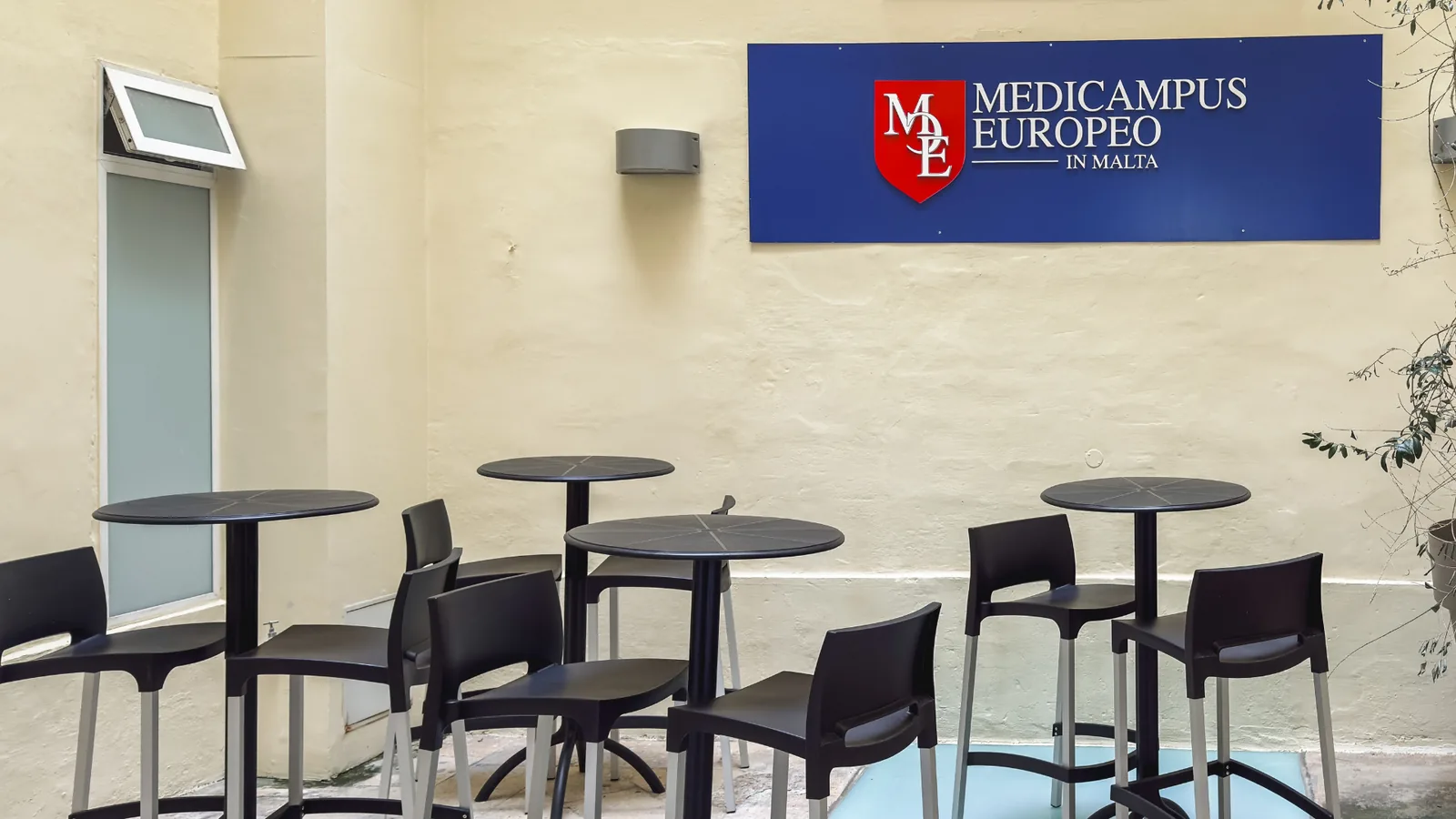
Student common area at MediCampus Europeo
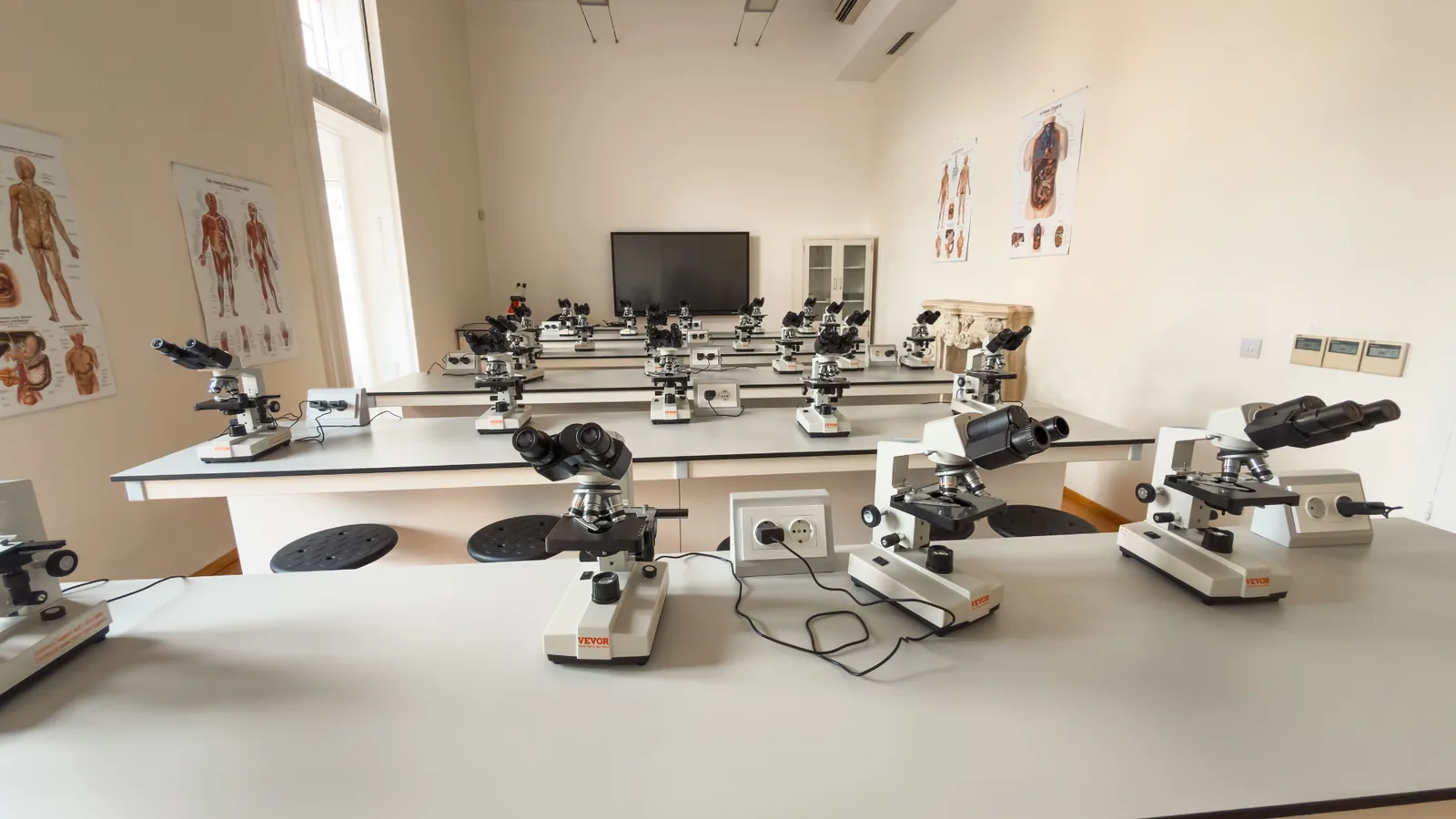
Microscopy laboratory at MediCampus Europeo
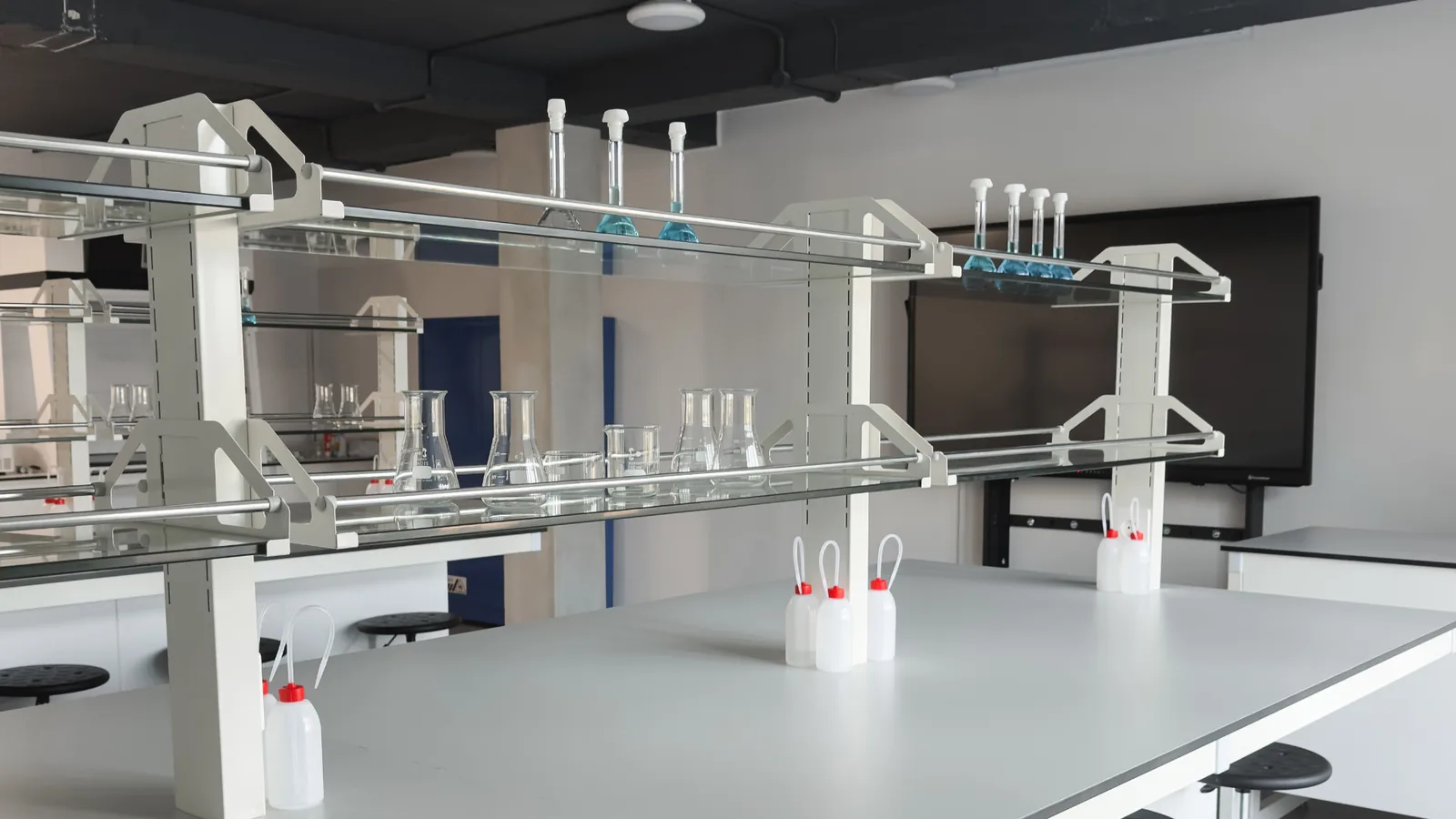
Chemistry laboratory at MediCampus Europeo

Ready to start?

Request a free consultation and discover how we can help you build your future in Medicine or Dentistry abroad.

Request a Free Consultation