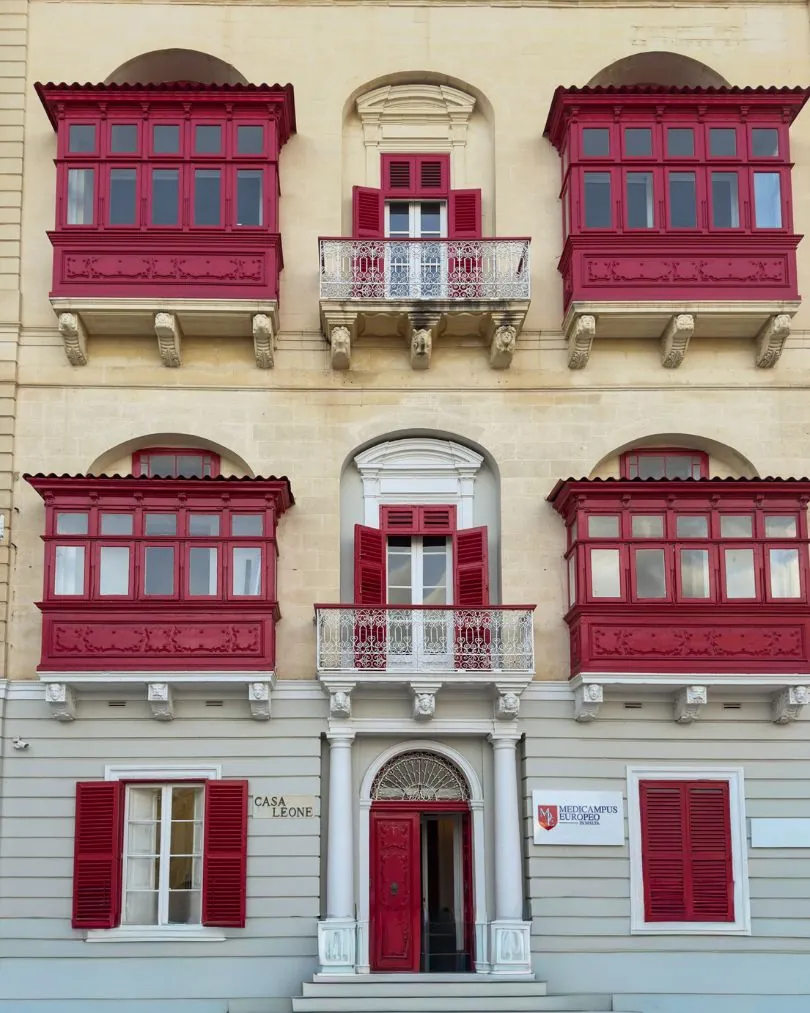
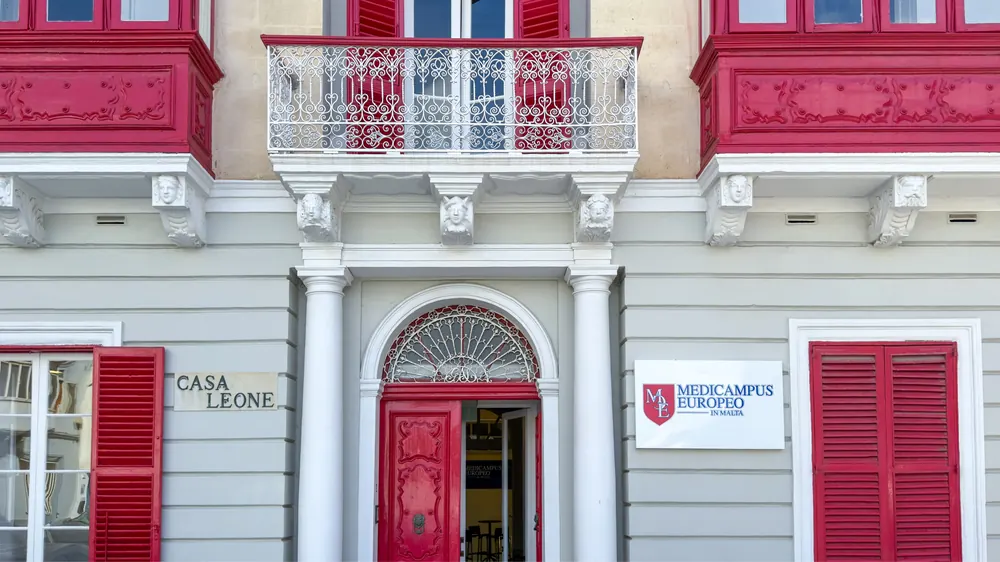
MediCampus Europeo (MCE) is a young medical school based in Malta. In just a few years, the project has developed into an active higher education institution: today, the campus already welcomes first- and second-year medical students, and a new class will join the academic community in September.
Although MCE is a relatively young institution, it is built on solid academic foundations. Its medical programme has been developed in collaboration with Trakia University, a Bulgarian state university ranked among the country’s top ten universities, with experience in medical education dating back to 1982.
MCE therefore combines the innovation of a new-generation medical school — more international, practical and student-centred — with the academic strength of an established university structure backed by more than 40 years of experience in medical education.
Studying Medicine in English in Malta in an International Environment
The Medicine programme at MediCampus Europeo is a six-year, 360-ECTS degree taught entirely in English.
MCE is licensed by the Malta Further and Higher Education Authority (MFHEA) as a Higher Education Institution, under licence no. 2024-020.
The programme is delivered through an academic franchise partnership with Trakia University, a Bulgarian state university that awards the final Doctor of General Medicine (MD) degree.
For students, this means being able to complete their entire medical education in Malta while using English every day — not only during lectures, but throughout university life and when interacting with classmates from different countries and cultural backgrounds.

Why Choose MediCampus Europeo to Study Medicine in Malta?
MediCampus Europeo has been developed around a different model from that of large medical faculties enrolling hundreds of students each year.
- Small-group teaching. Groups of approximately 12–15 students encourage greater interaction with lecturers, active participation and more direct academic feedback.
- International teaching staff. MCE brings together professors and medical professionals from a range of European academic institutions.
- A medical degree taught entirely in English. Studying Medicine in Malta means using English not only as the language of instruction, but also as part of everyday life outside the classroom.
- An international student community. Students representing more than 20 nationalities contribute to a multicultural learning environment and create opportunities for international networking from the university years onwards.
- A practical approach and progressive clinical training. Laboratory work, simulations and hands-on activities complement the scientific curriculum, while the clinical component gradually becomes more prominent from the third year.
- A European clinical network. Clinical training activities can take place at universities, teaching hospitals and MCE partner institutions across Europe.
- Dedicated student support. MCE’s Student Office supports international students throughout university life and helps them settle into life in Malta.
- Research and academic networking. Scientific activities, collaborations and conferences allow students to engage with the wider academic and research community beyond the classroom.
- Malta is well connected. Numerous direct flights, including low-cost connections, make the island easily accessible from several European cities.
These factors become particularly important during a demanding six-year medical degree, where the quality of the academic environment can be just as important as the curriculum itself.
From Medical Theory to Clinical Training
During the first years of the programme, students build strong foundations in the main scientific and biomedical disciplines, including Biology, Chemistry, Anatomy, Histology, Physiology and Biochemistry.
However, medical education at MCE is not limited to classroom learning.
The MediCampus Europeo Medicine programme gradually introduces students to the clinical dimension of the medical profession, integrating theoretical learning with laboratory work and practical activities from the early stages of the degree.
From the first year, students can access optional opportunities for exposure to healthcare environments, including non-curricular activities at the Saint James Hospital Group in Malta.
In summer 2026, MCE also organised the MCE Summer Dissection Workshop, an intensive ten-day programme dedicated to the study of human anatomy through guided dissection of real human cadavers, enabling students to explore anatomical structures, organs and their relationships directly.
From the third year onwards, students undertake clinical training activities at MediCampus Europeo partner universities and healthcare institutions across Europe.
This international exposure allows medical students to experience different healthcare environments while developing not only clinical skills, but also adaptability, communication abilities and the capacity to work effectively within international teams.
A Medical School Investing in People, Research and Academic Collaboration
Being a young medical school also means having the opportunity to build an academic environment that is collaborative and internationally connected from the outset.
The MediCampus Europeo faculty includes professors and healthcare professionals from a range of European and international academic institutions. Members of the teaching staff include, for example, academics working at universities such as the University of Milan, alongside professors and specialists from other European institutions.
MCE is led by Prof. Peter Labas, MD, PhD, a surgeon and university professor who served for eight years as Dean of the Faculty of Medicine at Comenius University in Bratislava.
In May 2026, MediCampus Europeo launched its Beyond the Prize conference series with Gregg L. Semenza, winner of the 2019 Nobel Prize in Physiology or Medicine, giving students the opportunity to engage directly with one of the world’s leading figures in biomedical research.
MCE is continuing to develop relationships with European universities, researchers and medical institutions, through activities including scientific research, academic collaborations, conferences and knowledge exchange.
Research therefore forms part of the continuing development of the Medical School, helping to create an environment in which students can engage not only with medical education, but also with the wider international scientific and academic community.
Who Awards the MediCampus Europeo Medical Degree?
Students complete their studies at MediCampus Europeo in Malta, while the final degree is awarded by Trakia State University, a Bulgarian state university.
After successfully completing the six-year programme and earning 360 ECTS credits, graduates are awarded the qualification of Doctor of General Medicine (MD).
Is the MediCampus Europeo Medical Degree Recognised?
The medical degree obtained upon completion of the MediCampus Europeo programme is awarded by a university located in a Member State of the European Union and is recognised in other EU countries for the purposes of practising medicine, in accordance with the applicable procedure for the recognition of professional qualifications obtained within the EU.
Graduates who wish to practise medicine in another EU country submit an application for recognition of their medical qualification to that country’s competent authority. Once the recognition process has been successfully completed and all applicable requirements have been fulfilled, graduates can register with the relevant national medical association.
A Student-Centred Model for Studying Medicine in Malta
MediCampus Europeo is a young medical school, and its credibility should therefore be assessed on the basis of what it has already built: an accredited six-year Medicine programme in Malta, an academic partnership with a European state university, students already enrolled, small teaching groups, international lecturers, practical learning opportunities, early exposure to clinical environments and an academic and scientific network that continues to expand.
In September, a new class of medical students will join the MCE community, marking another stage in the development of the Medical School.
For students considering studying Medicine in English in Malta, MediCampus Europeo represents a young but already structured higher education institution built around a clear educational model: international medical education, closer interaction between students and lecturers, and a programme designed to guide students progressively from scientific theory to clinical practice.







 Admission TestsNews & PressContacts